Here’s a scenario that plays out in housing societies all over India, more often than it should.
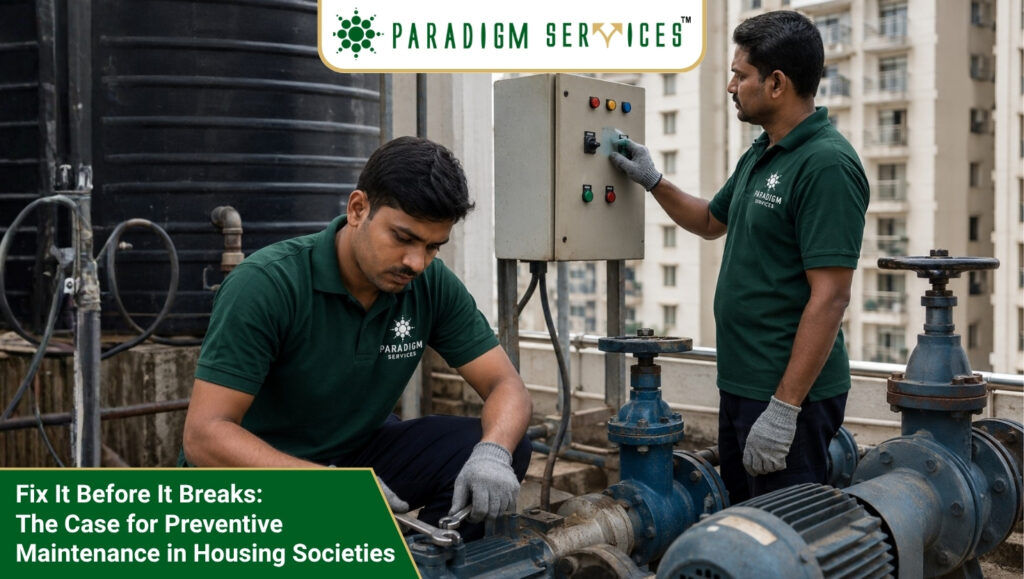
The overhead tank hasn’t been inspected in two years. One morning, residents on the upper floors notice low pressure. By afternoon, it’s a full breakdown. Emergency plumber, emergency costs, three days of disruption, and a very unhappy group chat.
The tank didn’t fail overnight. It gave signals for months. Nobody was watching.
Reactive Maintenance Is Costing You More Than You Think
Most housing societies operate on what could generously be called a react-and-repair model. Something breaks, someone complains, it gets fixed. This feels economical because why spend money on something that isn’t broken?
The answer: because reactive repairs are almost always more expensive than preventive ones. Emergency plumbing costs 3 to 5 times what planned work does. A failed lift motor requires complete replacement; a serviced one lasts years longer. Cracks in external walls, left unattended, become structural concerns.
The savings from preventive maintenance don’t show up as a line item. They show up as things that didn’t happen. That’s what makes them easy to overlook until it’s too late.
What a Preventive Maintenance Schedule Actually Looks Like
It’s less glamorous than it sounds. A good PM schedule is simply a calendar of what needs to be checked, cleaned, tested, or serviced, and when.
Monthly tasks might include pump and motor checks, fire extinguisher inspections, and common area electrical testing. Quarterly might cover lift servicing, DG set maintenance, and plumbing line inspections. Annually: waterproofing checks, facade inspection, STP and water tank cleaning.
The discipline is in the doing, not the planning. Many RWAs have schedules on paper that never translate to action. This is where accountability, whether internal or through a professional FM partner, makes all the difference.
The Role of Documentation
A maintenance activity without a record is, for practical purposes, a maintenance activity that never happened. When a dispute arises with a vendor, a resident, or an insurer, documentation is the only thing that protects you.
Beyond disputes, good records reveal patterns. If the same pump needs attention every three months, that’s a replacement conversation, not another repair. Data drives smarter decisions.
Shifting the Culture
Preventive maintenance isn’t just a process change. It’s a mindset shift. It requires the committee to value invisible outcomes: the breakdown that didn’t happen, the resident complaint that never came in, the emergency fund that stayed intact.
This is a harder sell than it should be. Residents see maintenance charges; they don’t always see where the money goes. Transparent communication about what’s being maintained and why builds the case for proactive spending.
The societies that get this right tend to have lower long-term costs, fewer crises, and more confident committees. Because there’s a particular kind of stress that comes from waiting for things to break. Preventive maintenance takes that off the table.