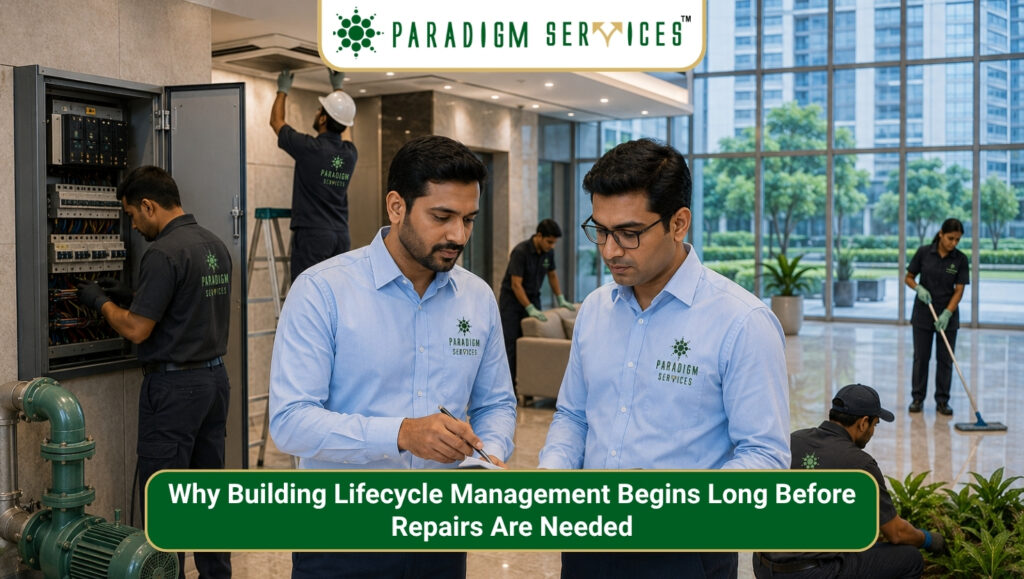
A building is one of the most valuable long-term investments any organization or residential community can make. While many people associate facility management with repairing equipment or fixing problems when they arise, the reality is very different. Successful buildings are not managed only after something breaks—they are carefully planned, monitored, and maintained throughout their entire lifecycle.
Building Lifecycle Management is a proactive approach that ensures every asset, system, and facility continues to perform efficiently from the day the property is handed over until decades into its operation. At Paradigm Facility Management Services, we believe that preserving a building’s value starts long before the first repair is ever required.
The Journey Begins with a Structured HOTO Process
A building’s operational lifecycle starts with the Handing Over and Taking Over (HOTO) process. This critical stage lays the foundation for efficient facility management by ensuring that all building systems, assets, and documentation are transferred accurately.
A professional HOTO process includes:
- Asset verification and inventory documentation
- Testing of mechanical, electrical, and plumbing systems
- Collection of warranties, manuals, and certifications
- Review of statutory compliance documents
- Knowledge transfer between construction and operations teams
When this transition is managed properly, future maintenance becomes more organized, efficient, and cost-effective.
Preventive Maintenance Extends Asset Life
Every building contains valuable infrastructure, including electrical panels, HVAC systems, plumbing networks, pumps, elevators, fire safety equipment, and common amenities. Waiting until these systems fail often results in costly repairs and operational disruptions.
Preventive maintenance focuses on scheduled inspections, servicing, and performance monitoring to detect small issues before they become major problems.
This proactive approach helps organizations:
- Extend equipment lifespan
- Reduce emergency breakdowns
- Improve system reliability
- Lower maintenance costs
- Minimize operational interruptions
Instead of reacting to failures, building managers gain greater control over both performance and budgets.
Technical Audits Support Better Planning
Buildings evolve over time, and so do their maintenance requirements. Regular technical audits provide valuable insights into the condition of critical infrastructure.
Professional audits help identify:
- Equipment approaching the end of its useful life
- Safety and compliance risks
- Opportunities for performance improvements
- Maintenance priorities
- Future capital investment requirements
These assessments enable property owners to make informed decisions rather than reacting to unexpected failures.
Documentation Creates Operational Continuity
One of the most overlooked aspects of lifecycle management is documentation. Accurate records provide the information required to maintain consistency even when facility teams or management committees change.
Essential documentation includes:
- Maintenance history
- Asset registers
- Service schedules
- Inspection reports
- Warranty information
- Compliance certificates
Well-maintained records improve accountability, simplify audits, and support better long-term planning.
Planning for the Future
Buildings are dynamic assets that require periodic upgrades to remain efficient and competitive. Lifecycle management allows organizations to prepare for future needs without disrupting occupants or overspending on emergency replacements.
Long-term planning supports:
- Energy-efficient system upgrades
- Modernization of aging infrastructure
- Budget forecasting
- Improved sustainability
- Enhanced occupant comfort
This strategic approach protects investments while ensuring buildings remain reliable for years to come.
Creating Sustainable Long-Term Value
The true objective of Building Lifecycle Management is not simply to reduce maintenance costs – it is to maximize the value of the property throughout its operational life.
At Paradigm Facility Management Services, we integrate HOTO services, technical audits, MEP management, preventive maintenance, administrative support, housekeeping, landscaping, pest control, and swimming pool maintenance into one comprehensive facility management solution. This integrated approach ensures every stage of a building’s lifecycle is professionally managed with consistency, efficiency, and care.
Great buildings are not defined by how quickly problems are repaired – they are defined by how effectively those problems are prevented. Building Lifecycle Management begins the moment a property is handed over and continues through every stage of its operation.
With structured planning, proactive maintenance, accurate documentation, and continuous monitoring, organizations can protect their investments, reduce long-term costs, and deliver safer, more efficient environments for residents and employees alike.
Because when buildings are managed throughout their lifecycle, they continue to perform at their best – today, tomorrow, and for many years to come.