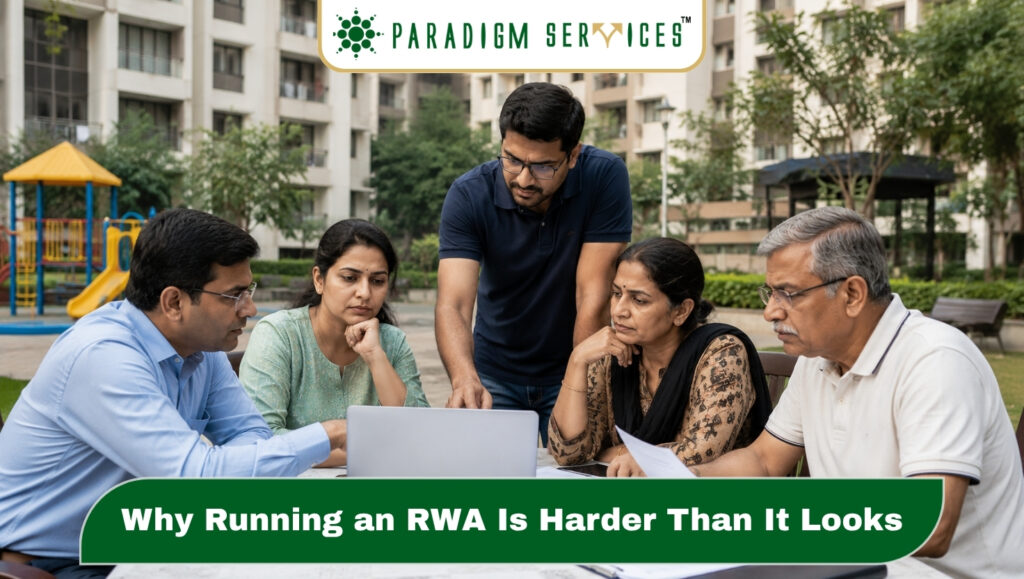
Most residents join the Residents’ Welfare Association thinking it’s a straightforward job: collect maintenance, fix what’s broken, keep things running. Then reality kicks in.
The truth is, managing a housing society today is less like neighbourhood administration and more like running a small business. With dozens of vendors, hundreds of residents, compliance requirements, and ageing infrastructure, all on a volunteer committee’s time, it’s no surprise that RWAs across India are stretched thin.
The Communication Gap Nobody Talks About
One of the most underrated challenges isn’t operational at all. It’s communication. Residents expect instant responses, transparent accounts, and clear explanations for every decision. RWA members, often working full-time jobs, find themselves fielding complaints on WhatsApp at 11pm.
There’s no easy fix here. But housing societies that invest in structured communication, monthly circulars, open AGMs, published financials, consistently see less friction and more resident cooperation. Clarity builds trust, even when the news isn’t great.
Vendor Management: The Constant Juggle
From security agencies to housekeeping, AMC vendors to elevator maintenance, a mid-sized housing society manages 10 to 20 service contracts at any given time. Each comes with its own renewal dates, SLAs, and performance issues.
Without a system, things slip. A fire safety AMC lapses. A waterproofing warranty goes unclaimed. A vendor inflates rates because no one checked market benchmarks. These aren’t failures of intent. They’re failures of process.
The RWAs that manage this well tend to maintain a simple vendor register, assign accountability, and do quarterly reviews. It doesn’t need to be sophisticated. It just needs to happen.
The Money Problem
Budgeting for a housing society is genuinely hard. Unlike a business, you can’t easily raise your revenue when costs go up. Residents resist maintenance hikes. Yet expenses, electricity, staff salaries, repairs, only move in one direction.
Add to this the challenge of unpaid dues, GST compliance, audits, and sinking fund management, and the finance function of an RWA demands far more attention than most committees anticipate.
A robust facility management partner can take a significant chunk of this burden off the committee. Not by replacing oversight, but by bringing the systems, expertise, and accountability that volunteer committees can’t always maintain on their own.
What Good Facility Management Actually Changes
Residents rarely notice good facility management. Lifts just work. The lobby is clean. The security roster is always filled. The accounts are audited and available.
What they do notice is when things go wrong. And that’s exactly what a professional Facility Management partner is there to prevent, quietly, consistently, behind the scenes.
RWAs that have made the shift from self-managed chaos to professionally supported operations often say the same thing: they wish they’d done it sooner.