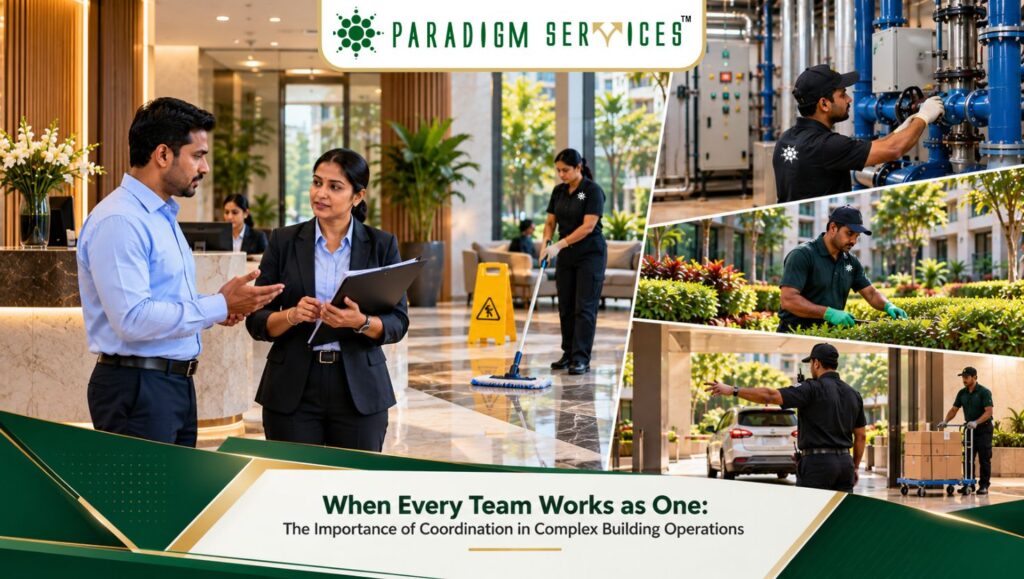
Modern buildings are complex environments where multiple teams, systems and service providers must work together to maintain smooth daily operations. From large residential communities and gated apartments to commercial buildings and corporate offices, successful facility management depends not only on individual performance but also on how effectively everyone coordinates.
Even when every team performs its duties well, poor communication between departments can create delays, repeated work, unresolved complaints, and operational gaps. True facility management excellence begins when every team works toward the same goal.
Coordination Connects Every Operation
Building operations involve administrators, facility managers, technicians, housekeeping professionals, landscapers, vendors, and other support teams. Each plays a different role, but their responsibilities often overlap.
For example, resolving a water leakage issue may require coordination between a technician, housekeeping staff, the facility manager, and the property administration team. Without clear communication, the repair may be delayed or the affected area may remain unattended.
Coordinated planning ensures that information reaches the right people and that every activity is completed in the correct sequence.
Communication Prevents Operational Gaps
Clear communication is the foundation of effective teamwork. Daily briefings, task allocation, documented handovers, service reports, and escalation procedures help teams understand priorities and responsibilities.
When issues are reported promptly and updates are shared consistently, managers can make faster decisions and avoid unnecessary confusion.
Shared Accountability Improves Results
Coordination works best when teams take responsibility for outcomes rather than focusing only on individual tasks.
Clear performance standards, defined ownership, regular reviews, and follow-ups encourage employees to work together. This reduces the risk of issues being overlooked simply because they fall between departments.
Technology Supports Better Coordination
Digital service requests, maintenance tracking systems, inspection checklists, and reporting dashboards can improve visibility across teams. These tools help facility managers track pending tasks, monitor progress, and identify delays before they affect building operations.
However, technology delivers the best results when supported by trained professionals, clear processes, and a culture of collaboration.
Building a Culture of Collaboration
At Paradigm Facility Management Services, we understand that efficient building operations require more than managing individual services. Administrative Services, Housekeeping, Landscaping, MEP Services, Technical Audits, HOTO Services, Pest Control, and Swimming Pool Maintenance must work within a coordinated operational framework.
By encouraging communication, accountability, and teamwork, facility management can create safer, more efficient, and better-maintained environments for residents, employees, and visitors.
When every team works as one, individual efforts become collective progress and complex building operations become easier to manage.