A building can look fine on the surface while quietly losing money every day.
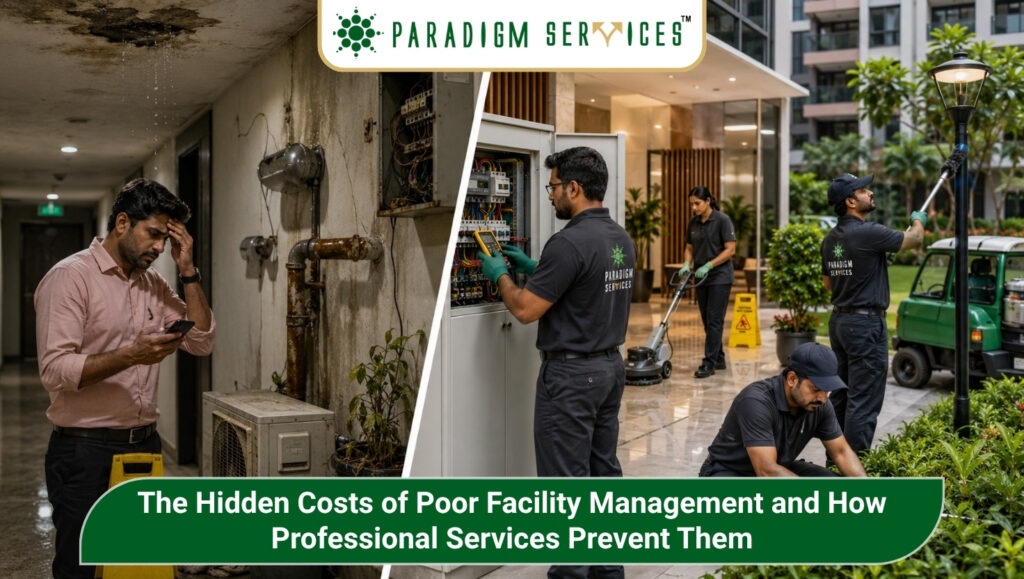
A small water leak, an inefficient HVAC system, delayed repairs, poor housekeeping, unmanaged pest activity, or neglected landscaping may appear to be minor issues. But when these problems continue without proper attention, they can lead to higher operating costs, safety concerns, occupant dissatisfaction, and expensive repairs.
This is where professional facility management makes a measurable difference.
Small Problems Can Become Expensive Problems
Poor facility management often begins with delayed action. A minor electrical fault can become a major breakdown. A small plumbing leak can damage walls, flooring, or equipment. Neglected equipment may consume more energy and eventually require costly replacement.
The real cost is not always visible in the initial repair bill. It can include operational disruptions, productivity loss, complaints, emergency service charges, and damage to the property’s reputation.
Poor Maintenance Impacts Energy Efficiency
Building systems such as electrical installations, air-conditioning, pumps, generators, and water systems require regular inspection and maintenance.
When these systems are not properly monitored, their efficiency can gradually decline. Equipment may consume more energy, operate under unnecessary stress, or fail unexpectedly.
Professional MEP management and preventive maintenance help identify issues early, improve system performance, and reduce avoidable operating expenses.
Neglected Common Areas Affect Occupant Satisfaction
For residential communities, poorly maintained corridors, lifts, gardens, swimming pools, parking areas, and recreational spaces can quickly affect residents’ perception of the property.
Similarly, in corporate offices and commercial buildings, unclean or poorly maintained spaces can influence employee comfort, visitor experience, and the professional image of the organisation.
Professional housekeeping, landscaping, pest control, and routine inspections help maintain consistent standards across the property.
Reactive Management Costs More
Waiting until something breaks often means paying for emergency repairs instead of planned maintenance.
Professional facility management takes a proactive approach. Regular inspections, maintenance schedules, technical audits, service tracking, and proper documentation allow facility teams to identify potential problems before they become major failures.
This shift from reactive maintenance to proactive management can improve reliability and make expenses more predictable.
The Value of Integrated Facility Management
Buildings involve multiple interconnected services. Administrative coordination, housekeeping, landscaping, MEP, pest control, swimming pool maintenance, technical audits, and HOTO activities all contribute to smooth operations.
When these services work independently without proper coordination, gaps can develop. Integrated facility management brings them together under structured processes and professional supervision.
This creates better accountability, faster communication, and more consistent service delivery.
Protecting the Long-Term Value of the Property
Professional facility management is not simply an operating expense. It is an investment in the property’s performance, safety, appearance, and long-term value.
At Paradigm Facility Management Services, we support residential communities, gated communities, commercial buildings, and corporate offices through integrated facility solutions designed to prevent avoidable problems and maintain high operational standards.
The cost of poor facility management may remain hidden—but its impact is real. Professional management helps identify those hidden costs before they become expensive problems.